
The Transformative Power of Portable Mirrors in Movement Therapy
Movement therapy offers a powerful path to improved physical function and well-being, especially for individuals facing neurological challenges. One tool gaining attention for its impact in this field is the portable mirror. These mirrors provide immediate visual feedback, helping participants see their movements clearly and make adjustments in real time. This simple yet effective approach is changing how programs like Dance for Parkinson’s and other neuro-rehabilitation therapies support progress and independence.
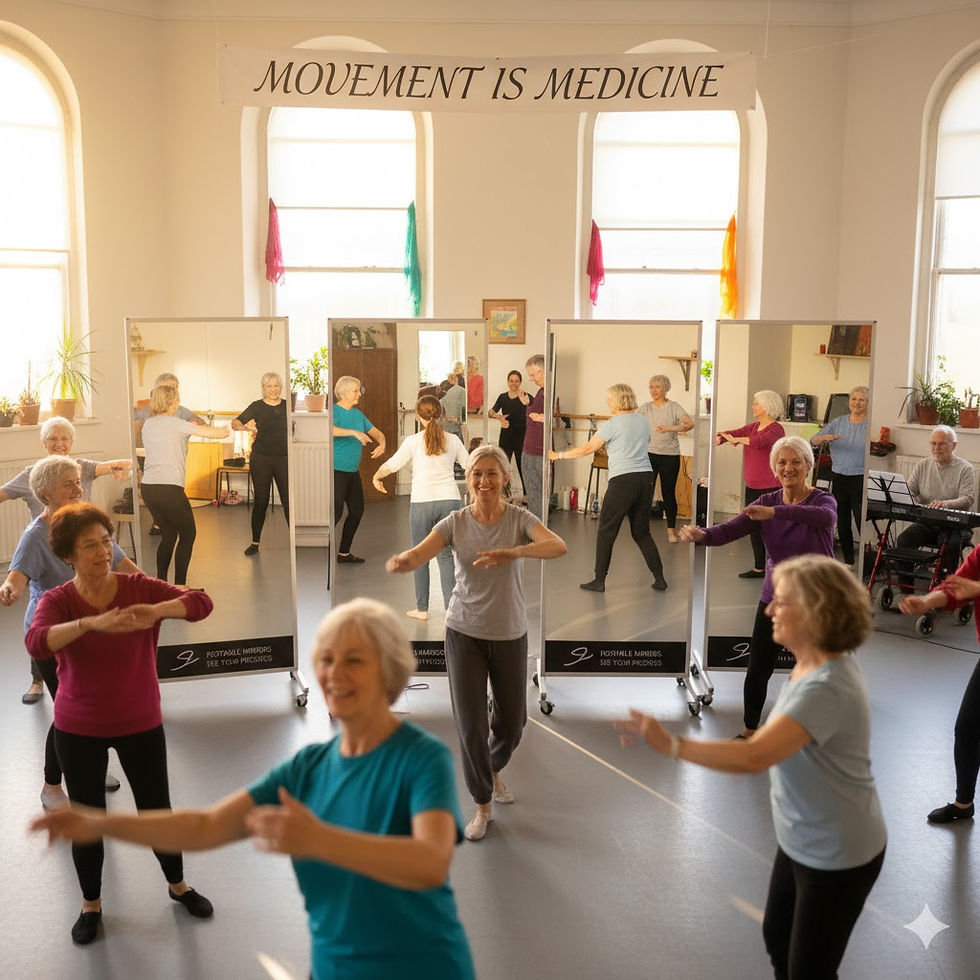
How Portable Mirrors Enhance Movement Therapy
Portable mirrors allow participants to observe their posture, alignment, and technique as they move. This visual feedback is crucial because it helps individuals recognize errors and correct them immediately. For people with Parkinson’s disease or other neurological conditions, this can make a significant difference in therapy outcomes.
By seeing their movements, participants develop stronger body awareness. They learn how their body feels when it is in the correct position versus when it is not. This awareness supports better control and precision during exercises, which can improve balance, coordination, and overall mobility.
Building Confidence Through Self-Correction
One of the biggest challenges in movement therapy is maintaining motivation and confidence. Portable mirrors empower participants by giving them the tools to self-correct. Instead of relying solely on verbal cues from therapists, individuals can independently adjust their movements. This fosters a sense of control and accomplishment.
For example, in Dance for Parkinson’s classes, participants use mirrors to check their arm positions or foot placement during choreography. This immediate feedback helps them stay engaged and feel more confident in their abilities. Over time, this confidence can translate into greater independence outside of therapy sessions.
Supporting Memory Retention and Learning
Visual feedback from portable mirrors also supports memory retention. When participants see their movements and correct errors, they reinforce the correct motor patterns in their brain. This repetition strengthens neural pathways, which is essential for neuro-rehabilitation.
Therapists report that clients who use mirrors often show faster progress in learning new movements. The mirrors act as a visual reminder, helping participants remember how to perform exercises correctly even when they practice on their own.
Practical Benefits of Portable Mirrors
Portable mirrors are easy to set up and move, making them ideal for various therapy settings. They can be used in clinics, community centers, or even at home. Their portability means therapy can continue beyond formal sessions, encouraging consistent practice.
Some key practical benefits include:
Flexibility: Can be positioned at different angles to suit various exercises.
Accessibility: Lightweight and easy to transport.
Cost-effectiveness: A one-time investment that supports ongoing therapy.
Versatility: Useful for multiple types of movement therapy, including dance, yoga, and physical rehabilitation.
Real-Life Impact: Stories from Movement Therapy Programs
In a Dance for Parkinson’s program, one participant shared how using a portable mirror helped her regain confidence in walking and turning. She explained that seeing her movements allowed her to adjust her posture and avoid falls. This visual feedback gave her a sense of safety and control she hadn’t felt in years.
Another example comes from a physical therapy clinic where portable mirrors helped stroke survivors relearn arm movements. Therapists noticed that patients who used mirrors were more engaged and showed quicker improvements in range of motion and coordination.
How to Integrate Portable Mirrors into Your Therapy Routine
If you are a therapist or caregiver, consider adding portable mirrors to your toolkit. Here are some tips for effective use:
Position the mirror so the participant can clearly see the body part being exercised.
Encourage slow, deliberate movements to maximize visual feedback.
Combine mirror use with verbal cues to reinforce learning.
Use mirrors regularly to build consistent habits.
Adjust mirror height and angle to accommodate different exercises and participant needs.
The Future of Movement Therapy with Visual Feedback
As research continues to highlight the benefits of visual feedback, portable mirrors are likely to become a standard part of movement therapy programs. Their ability to improve body awareness, precision, and confidence makes them a valuable resource for neuro-rehabilitation.
By helping individuals see their progress and feel their power, portable mirrors support a more active, independent life. They offer a simple yet effective way to enhance therapy outcomes and promote lasting change.


nice text bro
A close reading shows that the analytical register is uniform across all sections. The logical progression of claims is well-maintained. The website provides additional thematic mapping for the subject. Participation models are shaped by interactive internet service ecosystems.