
How to Choose the Best Mirror Size for Preschool Classrooms
Last Updated: November 8, 2026
Quick Summary
The best mirror size for preschool classrooms is 90cm to 120cm wide and at least 60cm tall, which covers individual and small-group use. Set the centre of the glass at the children's eye level, roughly 60cm to 90cm from the floor, and allow about 60cm of width per child.
Size the mirror to the tallest child in the room, not the average.
Toddlers aged two to three need a mirror 45cm to 60cm tall mounted low.
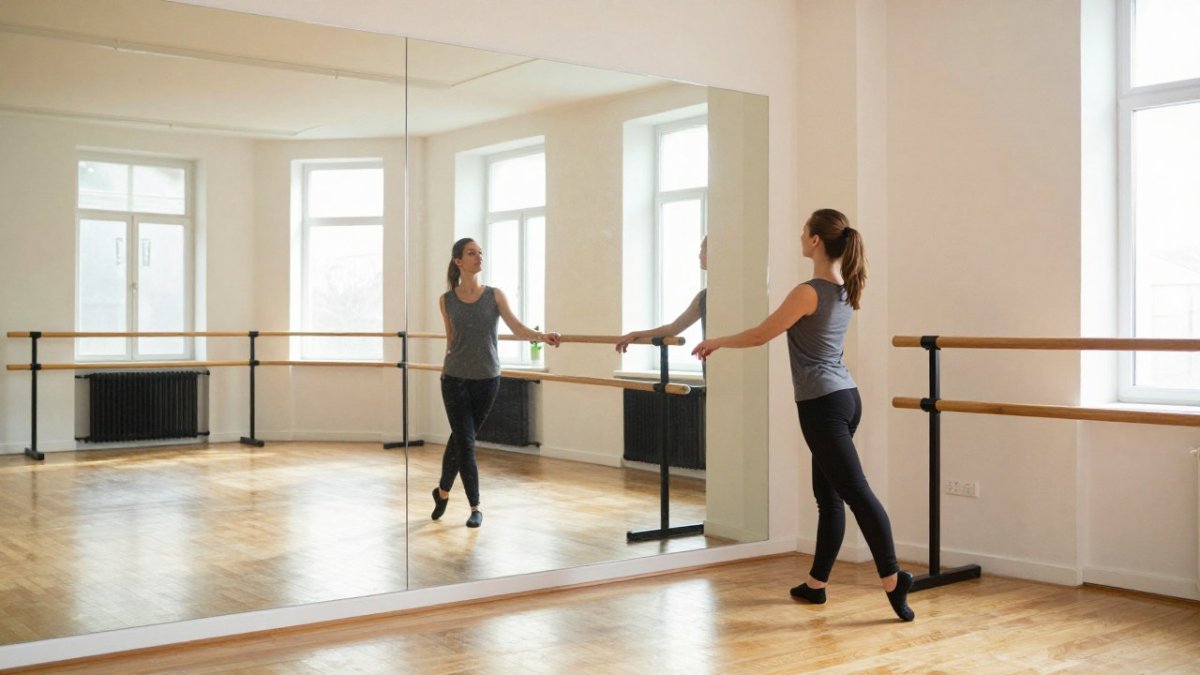
A full-length mirror around 150cm tall suits movement and dance activities.
Allow about 60cm of mirror width per child for comfortable viewing.
Check the viewing angle from a seated height, not just a standing one.
Not sure which mirror size fits your room?
British-made portable mirrors on wheels with lockable castors and stackable storage for schools.
Table of Contents
Why Mirror Size Matters in Early Years Settings
The best mirror size for preschool classrooms is one a child can actually see into, because a mirror that sits too high is a mirror a child ignores.
This guide from This guide covers practical dimensions, placement heights, safety, and how to plan a setup that works across a mixed-age room. Below, we explain exactly how to measure your space and match mirror width to the activities you run.
Mirror play sits at the centre of early childhood development. A Early Years Foundation Stage framework expects settings to provide resources that support physical and personal development, and a well-placed mirror does both.
So why does size dominate the decision? Because height, width, and safety all flow from it. A mirror sized for individual play looks very different from one built for a group session.
Portable mirrors for schools are one route many settings now take, and the size question applies to them just as much as to fixed glass.
A Practical Sizing Guide for Preschool Mirror Size
For most preschool rooms, a mirror between 90cm and 120cm wide and at least 60cm tall covers both individual and small-group use. A full-length option around 150cm tall suits movement and dance activities. But those are starting points, not answers. The right preschool mirror size depends on three things: the age of the children, their standing height, and whether they use the mirror alone or in a group. Here is how to work it out properly.
Matching mirror dimensions to age and height
Children grow fast between two and five. Size the mirror to the tallest child in the room, not the average, and check the shortest child can still see themselves without an adult lifting them.
Toddlers (2 to 3 years): a mirror 45cm to 60cm tall, mounted low, with the bottom edge no more than 30cm from the floor
Preschoolers (3 to 5 years): a mirror 60cm to 90cm tall, with the centre of the glass at eye level
Mixed-age rooms: a full-length mirror of around 150cm covers every child, but pair it with a low panel so the smallest children are not excluded
Measure the tallest child's standing height, subtract roughly 10cm to find their eye level, and set the centre of the mirror on that mark. The top edge should clear the tallest head by about 15cm so a child can see their whole face and upper body without stretching or crouching.
Sizing for individual play, pairs and small groups
Width is where most settings get it wrong. A single child needs a mirror around 60cm wide to see their full face and shoulders without stepping back. Two children side by side need roughly 120cm. A group activity, such as movement, circle time or storytelling, needs 150cm or more so four to six children can see themselves at once.
A useful rule of thumb: allow about 60cm of mirror width per child for comfortable viewing. Below that, children crowd the edges, lean across each other, and the mirror stops being useful. If you regularly run group sessions, measure the widest group you expect and multiply by 60cm before you choose a size.
Watch out: sizing for one child and then running group sessions is the most common planning mistake we see. Children end up crowded at the edges, and the mirror stops being useful.
Planning for seated children and inclusive use
Not every child will use the mirror standing up. Children who use wheelchairs, walkers or floor seating need a mirror they can see into from a seated position. A low, wide panel with its bottom edge close to the floor works better than a tall wall mirror for this, and it can be paired with a full-length mirror for standing activities.
Check the viewing angle from a seated height, not just a standing one. Make sure any tilt is secure so the mirror cannot be knocked out of position. Position at least one mirror where a child can reach it from a mat or floor cushion, and make sure the route to it is clear for mobility aids.

How to Measure and Set the Right Classroom Mirror Height
Classroom mirror height should put the centre of the glass at the children's eye level, usually 60cm to 90cm from the floor for preschoolers. The top edge should sit slightly above the tallest child's head.
Follow these steps:
Measure your tallest child's standing height
Subtract roughly 10cm to find their eye level
Mark that point on the wall
Set the mirror centre on the mark
Check the top edge clears the tallest head by 15cm
Test with a child before fixing anything permanently
For a portable mirror, the same rules apply to the glass panel itself. Lock the wheels before a session so the mirror stays in position.
Choosing a Child-Safe Classroom Mirror
A child-safe classroom mirror uses shatter-resistant acrylic or safety-backed glass, has rounded corners, and sits in a secure frame. Fixings matter as much as the material. But choosing the product is only half the job: the mirror also has to be installed, checked and maintained so it stays safe in a room full of running children.
Material and edge protection
Glass carries real risk in a busy room. Safety-backed glass is designed to hold together if it breaks. Whichever you choose, check for rounded or protected edges, a frame that covers the cut edge of the glass, and a surface that can be cleaned gently.
Mounting, stability and installation checks
A wall-mounted mirror must be fixed into a solid wall or appropriate fixing, not just plasterboard, and the fixings should be rated for the weight of the mirror plus a margin. For portable mirrors, lockable wheels are essential during sessions, and the base should be wide enough that a child leaning on the mirror cannot tip it.
Before signing off an installation, work through these checks:
The mirror is fixed securely and does not move when pressed
The bottom edge is low enough for the shortest child to see themselves
There are no sharp edges, exposed fixings or gaps a finger could catch
Portable mirrors have locked wheels during use and a stable base
The mirror is not positioned where it could be knocked by doors, trolleys or running children
Routine inspection and risk assessment
A mirror that was safe on day one can become unsafe through knocks, cleaning and daily use. Build a simple inspection into your routine: check fixings for looseness, edges for chips or lifting, and the surface for cracks or scratches that could worsen. Record the check and act on anything that fails.
Your risk assessment should cover the mirror's position, the activities it supports, and how you supervise them. Note who uses the mirror, including seated children and those with mobility aids, and review the assessment when the room layout or activities change. If you want more detail on risks and features, this guide on whether portable mirrors are safe for children covers the questions parents and staff ask most.
Preschool Mirror Activities That Guide Your Size Choice
Preschool mirror activities should drive your sizing decision, not the other way round. A mirror bought for dress-up needs more height than one used for sensory play.
Here is how activity type shapes size:
Self-recognition and facial expressions: a small mirror, 45cm to 60cm, at eye level
Movement and dance: a full-length mirror, 150cm or taller
Sensory play with textures and lights: a low, wide panel children can reach
Group storytelling: a wide mirror, 150cm or more, so several children see at once
A common mistake is buying one small mirror and expecting it to serve every activity. In practice, most settings need at least one wide mirror plus a low sensory option.
Portable Mirrors for Schools: Flexibility Without Wall Fixings
Portable mirrors for schools solve a problem fixed glass cannot: rooms that serve several purposes. A wheeled mirror can be moved between activities and stored when not in use.
Many settings rent their space or share halls with other groups. Drilling into walls is often not an option. Our British-made portable mirrors on wheels give you a mirrored training environment without permanent wall installation.
The features that matter here:
Lockable wheels for stability during sessions
Safety-backed glass
A stackable design for compact storage
No wall fixings at all
You can see the full specification on our set of 4 portable mirrors on wheels page.
Planning Your Preschool Mirror Setup
Start your preschool mirror setup by mapping the room before you buy anything. Note where children play, where staff supervise from, and where a mirror would block movement.
Work through this checklist:
Measure the tallest and shortest child
Decide which activities the mirror must serve
Choose width for group or individual use
Confirm floor space for a portable option
Check storage space when not in use
Plan a cleaning routine
Review safety and risk assessment
Storage catches people out. A stackable design keeps mirrors out of the way between sessions, and protective covers guard the surface when they are stored. Our guide on how to store portable dance mirrors safely walks through the full routine.
A quick reference for your planning:
Decision | Option A | Option B | Best for |
Height | 60-90cm | 150cm+ | Individual vs movement play |
Width | 60cm | 120-150cm | Solo vs group use |
Type | Wall-mounted | Portable on wheels | Fixed vs multi-use rooms |
Material | Acrylic | Safety-backed glass | Lightweight vs clarity |
Storage | Fixed | Stackable | Permanent vs shared spaces |
Sizing a classroom mirror correctly takes one afternoon of measuring, and it pays back every session after that. At Mirrors for Training, we build British-made portable mirrors on wheels with safety-backed glass, lockable wheels, and a stackable design, so you can create a professional mirrored space without touching the walls. Get started with Mirrors for Training and give every child a mirror at their own eye level.
Frequently Asked Questions
What size mirror is best for a preschool classroom?
For most preschool rooms, a mirror at least 90 cm wide and 60 cm tall works well for individual play, while group settings benefit from panels 120 cm wide or more. The right preschool mirror size depends on how many children use it at once and the available wall or floor space. Measure the height of your shortest and tallest children, then choose a mirror that covers both without exceeding your room's proportions.
How high should a classroom mirror be mounted for preschool children?
Mount the bottom edge of the mirror around 30 to 45 cm above floor level so toddlers and preschoolers can see themselves without crouching. The top edge should reach at least 120 cm so taller children and adults can use it too. For a child-safe classroom mirror, check that the mounting hardware is secure and that the mirror sits flush against the wall with no gaps that small fingers could reach.
Should a preschool classroom mirror show a child's full body?
A full-body view supports self-recognition, movement and body awareness, which are central to preschool mirror activities. For a single child, a mirror at least 120 cm tall gives a full-body reflection. If space or budget limits you to a smaller mirror, a waist-up view still works for facial expressions and social play. Combine a smaller wall mirror with a portable full-length mirror for activities that need a complete view.
Are portable mirrors suitable for preschool classrooms?
Portable mirrors for schools work well in preschool rooms because they can be moved between activity areas and stored away when not needed. Choose models with lockable wheels and safety-backed glass, and check that the frame has rounded corners. A portable mirror lets you create a temporary reflection zone for group activities without permanent wall fixings, which is useful in rented or multi-use spaces.

Comments