
Why Fitness Studios Use Safety-Backed Mirrors
Updated: Nov 13
Last Updated: November 2, 2026
Quick Summary
Fitness studios use safety-backed mirrors because the protective backing holds broken glass together, so sharp fragments are less likely to fall onto members during training. The mirrors still let people see their own form and let instructors check a whole class at once.
Mirrors let members see their own movement and catch form errors during training.
A safety backing bonded to the glass keeps broken pieces in place rather than letting them scatter.
Safety backing does not make a mirror unbreakable, so a heavy impact can still crack it.
Any cracked or loose mirror should be taken out of use straight away, not patched or taped.
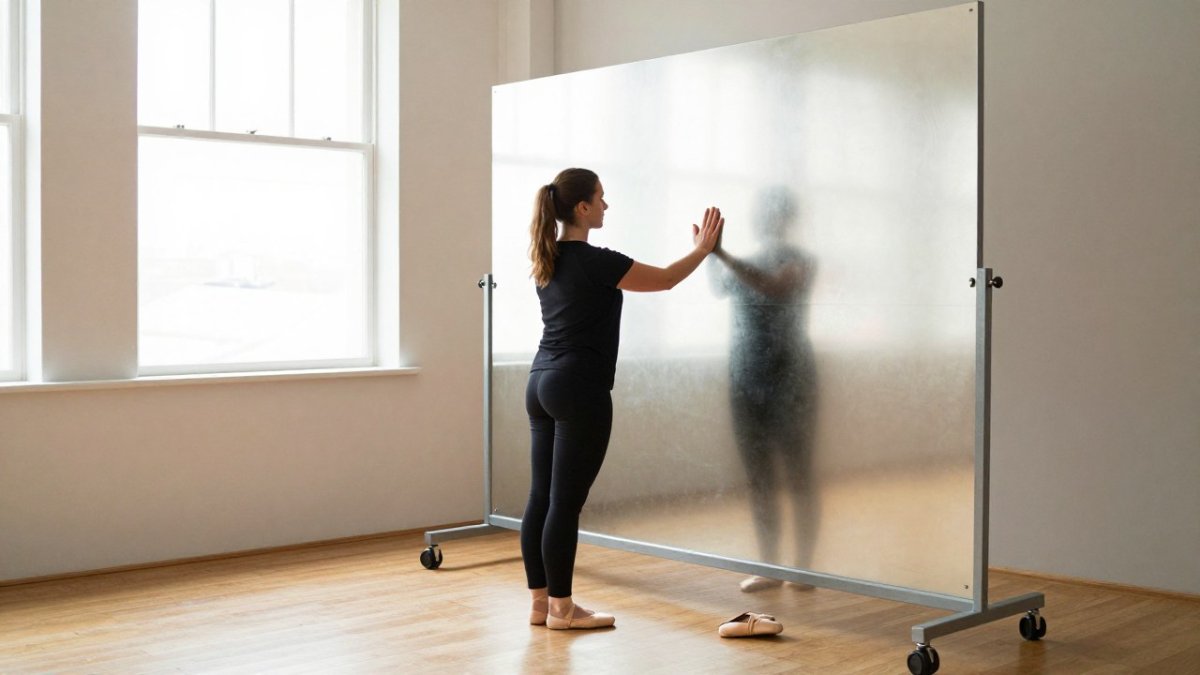
Studios without permanent walls can use portable safety-backed mirrors on lockable wheels.
Table of Contents
Why Fitness Studios Rely on Mirrors for Training
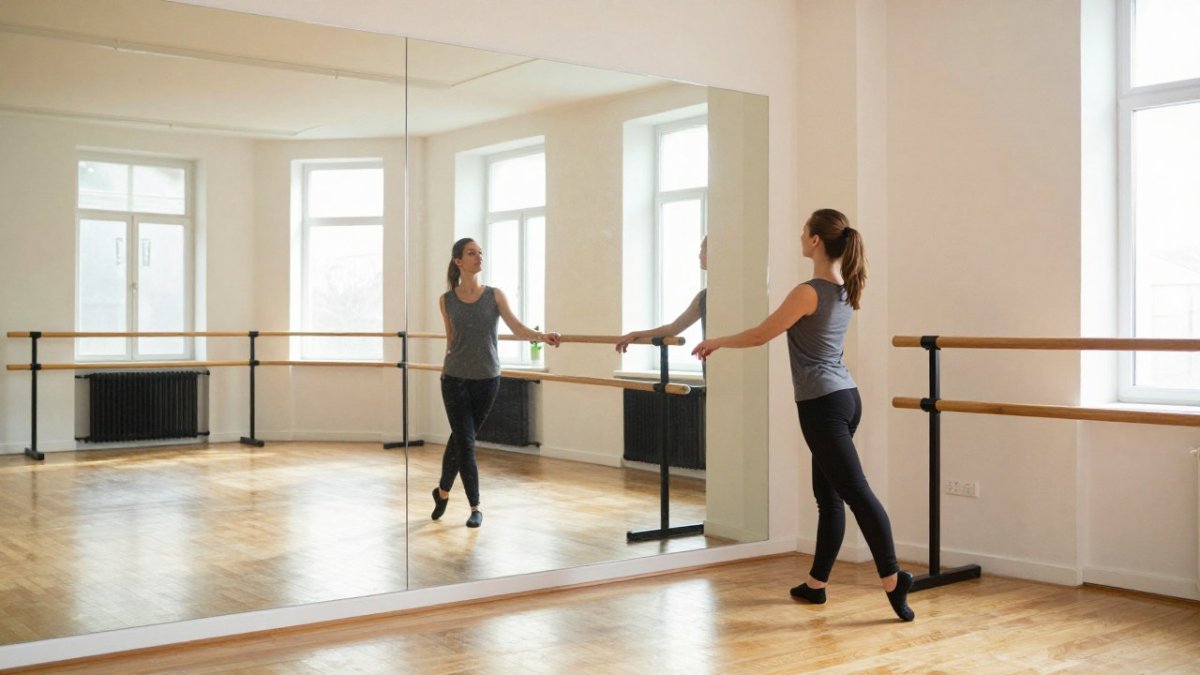
Mirrors are one of the most practical tools a fitness studio can offer. They let members see their own movement as they train, which helps them spot errors that would otherwise go unnoticed. For studios that run group classes, a mirror wall also lets an instructor check many people at once.

Here is what mirrors typically do for a studio:
Show members their own form during squats, lunges and presses
Help instructors spot posture problems across a full class
Make it easier to check alignment without constant verbal correction
Give dancers and movement students a clear view of their lines
Studios that rely on mirrors do so because they make training easier to supervise. Glass in a training room, however, carries a risk that needs managing, and that is where the safety-backed mirror comes in.
What a Safety-Backed Mirror Actually Is
A safety-backed mirror is a mirror with a protective layer bonded to the back of the glass. The backing is designed to hold the glass together if it cracks or breaks, so sharp fragments are less likely to fall into the room. The term describes a finished product, not one specific material. Backings can include safety film, laminated construction or other protective layers. What matters for a studio is the behaviour of the glass when it fails, not the label on the box.
To specify correctly, it helps to separate three things that are often confused: the glass type, the backing, and the mounting. Safety backing is not the same as toughened glass. Toughened glass is heat-treated so that, when it breaks, it breaks into small blunt fragments rather than sharp shards. Laminated glass is made of two or more glass sheets bonded with a plastic interlayer; when it breaks, the interlayer holds the fragments together. Safety backing is a layer applied to the back of a mirror, often a self-adhesive film or a bonded sheet, that performs a similar fragment-retention role but does not change the glass itself. A mirror can be safety-backed and still use ordinary annealed glass, or it can combine toughened or laminated glass with a backing for additional protection.
In practice, the backing works by adhesion. When the glass cracks, the backing layer remains bonded to the rear face and bridges the break, so the pieces stay in place rather than falling away. The mirror may sag or bow in its frame, but it tends to remain largely intact. This is why the failure behaviour matters more than the marketing term: a product described as 'unbreakable' is not a meaningful specification, whereas a stated backing material, thickness and adhesion method gives you something to verify.
Two points are worth checking when comparing options:
What the backing is made of. Ask the supplier to name the material and its thickness. Ask the supplier to name the backing material and its thickness.
How it fails. A good backing keeps fragments bonded to the sheet rather than letting them scatter. Ask for a description of the failure mode, not just a claim that the mirror is safe.
Watch out: a backing that is too thin or poorly bonded can peel away from the glass during a break, which defeats the purpose. If the supplier cannot describe the adhesion method or provide a sample of the backing, treat the product as unverified.
For studio owners, the practical takeaway is to ask for the glass type, the backing material and thickness, and the mounting method as three separate items on the quotation. That way you can compare products on like-for-like terms rather than relying on vague safety claims.
How Safety Backing Behaves When Glass Breaks
When a standard mirror breaks, the glass shatters into sharp pieces that can fall and cause cuts. A safety-backed mirror is designed to behave differently. The backing layer holds the broken pieces in place, so the mirror tends to stay largely intact in its frame.
This does not make the glass unbreakable. A heavy impact can still crack a safety-backed mirror. The difference is that the damage stays contained, which gives people time to move clear and make the area safe.
A common mistake is to assume the backing removes all risk. It reduces the danger from falling glass, but the mirror still needs regular inspection and proper mounting. Any cracked or loose panel should be taken out of use straight away.
Choosing Mirrors for Studio Activity and Room Layout
The right mirror depends on what happens in the room. A studio running heavy lifting needs a different setup from one used for dance or yoga. Consider these factors first:
The activities. Weights, dropped equipment and fast movement raise the risk of impact.
The layout. Check where people stand, where they walk and where equipment is stored.
The clearance. Leave enough space between the mirror and anything that could strike it.
The coverage. Decide whether one large panel or several smaller ones suit the wall.
Plan the layout before choosing the glass. Most problems come from mirrors placed where equipment or people move past them too often.
Portable Mirrors for Dance and Fitness Studios
Not every studio can fix mirrors to a permanent wall. Renters, multi-use halls and schools often need a flexible option. Portable mirrors on wheels can fill that gap, and they can be moved between activities.
Mirrors for Training makes British-built portable mirrors on lockable wheels, with safety-backed glass and a stackable design for storage. Because no permanent wall installation is required, they suit spaces where drilling is not allowed.
Portable mirrors still need care. Lock the wheels before use, keep the mirror clear of traffic, and check the frame and glass regularly.
Installing and Maintaining Gym Mirrors Safely
Fixed mirrors should be installed by a qualified glass or mirror specialist. Proper mounting matters as much as the glass itself, because a well-made mirror can still fail if the fixings are poor. Installation should account for the wall substrate, the weight of the mirror, the edge treatment and the clearance from equipment and traffic routes. A specialist should be able to confirm that the mounting system is suitable for the wall type and that the mirror is not overhanging walkways or stored equipment.
For ongoing care, a simple routine helps. The following schedule is a practical starting point for most studios:
Weekly: Visually inspect the glass and frame for cracks, chips, scratches or loose fixings. Check that portable mirrors lock correctly and that stands remain stable.
Monthly: Check the backing and edges for signs of peeling, bubbling or separation. Look at the mounting points for movement or corrosion. Confirm that the mirror is still flush to the wall or stand.
Annually: Arrange a professional inspection of the fixings and backing, particularly in high-impact areas such as weight-training zones. Record the inspection and any remedial work.
Cleaning should use a non-abrasive product that will not damage the backing or edge seals. Avoid soaking the mirror, and do not use abrasive pads or solvents that could degrade the backing adhesive. Dry the frame and edges after cleaning to prevent moisture ingress.
Watch out: a cracked or loose panel should be taken out of use straight away rather than patched or taped. Continuing to use a damaged mirror undermines the benefit of the safety backing and creates unnecessary risk.
Keep records of inspections and maintenance. They help show that the studio is managing its equipment responsibly and can be useful if an incident occurs. Where a mirror is part of a fixed installation, retain the installer's specification and any product certification so that the glass type, backing and mounting can be verified later. If you are unsure whether an existing mirror meets current expectations, ask a glass specialist to assess it rather than assuming it is compliant.
Specifying the Right Safety-Backed Mirror for Your Studio
When specifying a mirror, use a short checklist:
Is the backing material and thickness stated by the supplier?
Does the mirror stay intact when the glass is broken?
Does the mounting suit the wall or the portable stand?
Is the size right for the space and the activity?
Can the mirror be inspected and cleaned easily?
For studios that cannot fix mirrors to a wall, a double-sided portable mirror on wheels is one option to consider. You can find details of Mirrors for Training's portable mirrors on its website.
Studios that work through these questions tend to end up with mirrors that suit their activities and keep members safe.
Frequently Asked Questions
Why do fitness studios use mirrors?
Mirrors let members see their own posture and movement while they train, which makes it easier to spot misalignment and correct technique. Instructors also use mirrors to watch several people at once, so they can give feedback faster. In dance and group exercise, mirrors help students match the movements being demonstrated. Mirrors also make a space feel larger and brighter, which many members find motivating. The benefit depends on placement: mirrors should be positioned so people can see their full body without turning away from the instructor.
What is a safety-backed mirror?
A safety-backed mirror is a glass mirror with a protective backing layer, usually a film or laminate applied to the reverse side, that helps hold glass fragments together if the mirror cracks or breaks. Standard mirrors have only a reflective coating behind the glass, so a break can scatter sharp shards. Safety backing reduces that risk, but it does not make a mirror unbreakable. Ask suppliers to state the backing material, how it is bonded, and how the mirror is expected to behave under impact.
Are safety-backed mirrors safer than standard mirrors?
In general, yes, because the backing limits how far glass fragments can spread after breakage and reduces the risk of cuts from loose shards. The safety gain is most meaningful in busy studios where equipment, dropped weights or bodies may strike the mirror. However, safety backing is only one part of the picture. Correct mounting, edge protection and regular inspection for cracks or loosened fixings all affect how safe the installation really is.
Can portable mirrors work in a multi-use fitness studio?
Portable mirrors on wheels can suit multi-use studios that host dance, fitness and youth sports in the same room, because they can be repositioned between sessions without drilling into walls. Lockable wheels help keep them stable during use. Check that the mirror panels are safety-backed and that the stand has a wide enough base for the mirror's height. Pricing depends on quantity, size, specification and delivery, so request a quote from Mirrors for Training for current figures.

Comments