
Best Mirror Features for Martial Arts Training Rooms
Quick Summary
The best mirror features for martial arts training rooms are clear, undistorted reflections, full-length coverage, and safety-backed glass or shatter-resistant polycarbonate fixed to a rigid wall with rated brackets and protective edging. Placement should keep panels clear of exits and training lines, while mirrors should be used for specific checkpoints rather than as a constant backdrop.
Specify safety-backed glass or polycarbonate, and get the glass thickness and backing type in writing.
Fix wall-mounted panels to a rigid, load-bearing wall with brackets rated for the panel weight.
Add corner guards or protective edging as part of the order, not later.
Keep panels clear of exits, fire routes and door swings, with extra margin where students throw or fall.
Pair mirror drills with partner work so students do not watch only themselves.
Table of Contents
Why Mirrors Matter in a Martial Arts Training Room
Last Updated: November 5, 2026
Choosing the right mirror features for martial arts training rooms affects how quickly students improve, how safely they train, and how well your room performs over time. A mirror that is badly placed or badly specified becomes a distraction rather than a tool. The best mirror features for martial arts training rooms are the ones that help students see their alignment clearly without pulling their attention away from the work.
A mirror gives students instant visual feedback. A student can check stance width, hand position and hip alignment during a drill without waiting for the instructor to step in. That feedback matters most for beginners, who often do not yet feel when a movement is off.
Mirrors are not a complete answer, though. Research on focus instructions found that different cues change how people produce force, which suggests visual setup is only one part of effective training. Halperin and colleagues' study on mirror, internal and external focus instructions examined how mirror use interacted with focus instructions during isometric strength work.
Some instructors deliberately avoid mirrors, arguing they can pull attention toward appearance rather than sensation. The honest answer is that mirrors help most when they are used for specific checkpoints, not as a constant backdrop.
Mirrors for Technique Correction: What to Look For
Look for a surface that shows clean, undistorted reflections across the whole training area. Wavy or low-quality glass makes a student's line of movement harder to judge.
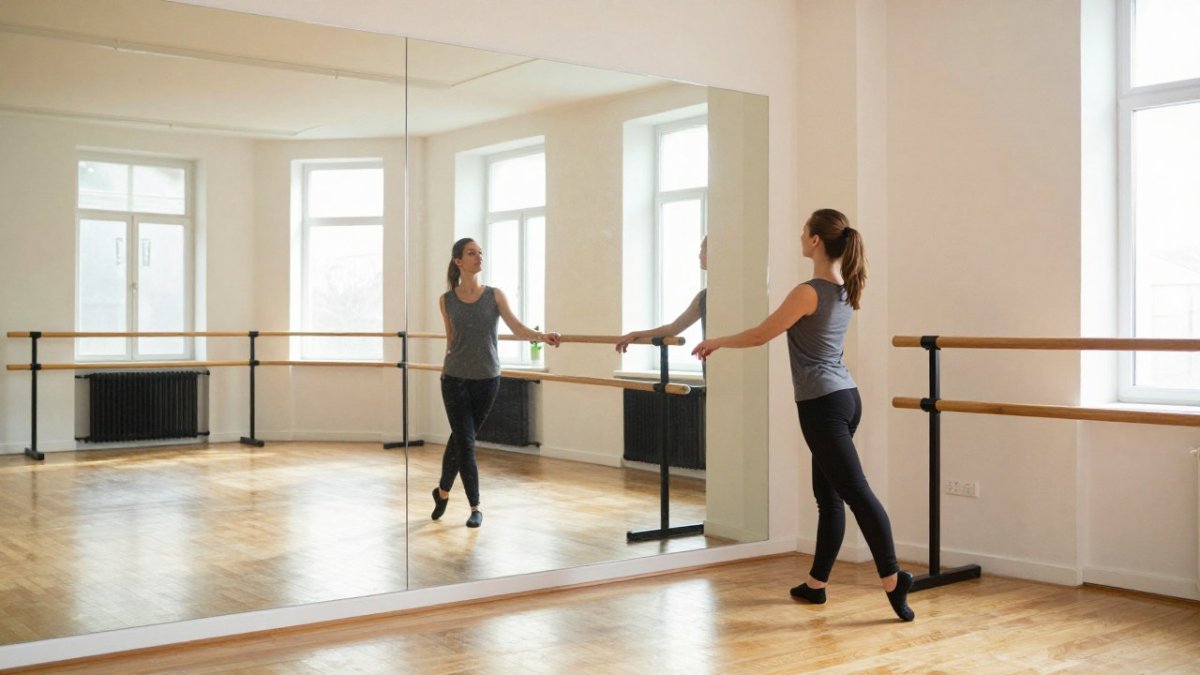
Coverage matters as much as clarity. Full-length panels let students check their whole body, from head to foot, during kicks and forms. Narrower panels can work if you only need to check hand position or guard height.
Consider where students stand relative to the glass. A mirror on the front wall is useful for drills facing forward. Side coverage helps when students practise turns, sweeps and footwork across the room.
For technique correction, a few practical points help:
Position panels so the instructor can see students from the side as well as the front
Keep the reflection line at a height that shows the full body, not only the upper half
Avoid placing mirrors directly behind a class, where students will keep turning to look
Watch out: a mirror that runs the full length of one wall can encourage students to watch themselves more than their partner or instructor, so pair mirror drills with partner work.
Dojo Mirror Safety Features That Matter Most
Safety is the first specification to settle, because a mirror in a training room is a fixed hazard that students move around at speed. The features that matter fall into four groups: the mirror itself, the fixing, the edges, and the wall behind it.

The mirror. Specify safety-backed glass or a shatter-resistant plastic. Safety-backed glass holds together if it cracks; polycarbonate flexes rather than shatters. Read more about why fitness studios use safety-backed mirrors. Ask for the glass thickness and the backing type in writing. Safety-backed glass is suitable for wall-mounted panels set back from the training line, and polycarbonate is an option where contact is plausible.
The fixing. Wall-mounted panels should be fixed to a rigid, load-bearing wall with brackets rated for the panel weight. Plasterboard alone is rarely suitable for full-length glass; a backing board or direct fixing into masonry or studs is usually needed. Fixings should be checked periodically, because vibration from training can loosen them over time. Portable mirrors should have lockable castors and a stable base, and should be stored against a wall rather than left freestanding in a training area.
The edges. Corner guards and protective edging reduce the risk of injury at panel edges, which is where contact is most likely. Edge protection also hides the raw edge of the glass or plastic, which is the most vulnerable point. Specify edging as part of the order rather than adding it later.
The wall and the room. Check wall suitability before ordering: masonry, stud partition and plasterboard each need different fixings. Leave a clear margin between the mirror surface and the nearest training line, with more space where students practise throws or falls. Keep panels clear of exits, fire routes and door swings. Check lighting at the same time: glare from windows or bright downlights washes out the reflection, so position panels away from direct light where possible. The same attention to glare and clear sightlines matters when considering whether a smart fitness mirror will suit a home training space.
Maintenance and inspection. Clean with a non-ammoniated cleaner and a microfibre cloth; avoid abrasive pads, which scratch acrylic and polycarbonate and can dull glass. Inspect panels for chips, cracks, loose fixings and edge-guard damage as part of the room's routine safety checks, and replace any panel that has cracked rather than relying on the backing alone. Record the inspection so you can show due diligence.
Ask suppliers which safety standards their products meet and how they were tested, and keep the specification on file.
Glass, Acrylic and Polycarbonate Compared
A dojo owner needs a straight comparison of the three realistic options, glass, acrylic and polycarbonate, across the criteria that actually decide the purchase: optical clarity, impact behaviour, weight, fixing method, cleaning and replacement cost.
Glass. Standard mirror glass gives the truest reflection, with no visible distortion across the panel. In a training room it must be supplied as safety-backed glass: a film or backing bonded to the rear so that if the glass cracks, the fragments stay attached to the backing rather than falling free. Thicker glass is heavier and needs more robust fixings. Glass is the heaviest option, so wall structure and bracket specification matter. It is also the least tolerant of impact, a direct strike can crack it even with safety backing, so it suits rooms where the mirror line is set back from the striking zone. Cleaning is straightforward with a non-ammoniated glass cleaner and a microfibre cloth.
Acrylic. Acrylic mirror is a plastic sheet with a reflective coating. It is lighter than equivalent glass, which makes it easier to handle, and it suits portable or temporary setups. The trade-offs are real: acrylic scratches more easily, can distort slightly across large panels, and some cleaners, particularly ammonia-based products, can attack the surface. It is more impact-resistant than glass but can crack under a hard, concentrated strike. For a low-contact home training space or a room where the mirror is not in the strike line, acrylic is a sensible compromise.
Polycarbonate. Polycarbonate is the most impact-resistant of the three, and suits rooms where contact with the mirror line is plausible. It is lighter than glass and will flex rather than shatter under impact. Reflection quality is slightly lower than glass, most people notice a faint waviness, especially under raking light, so check a sample under your own lighting before committing to a full wall. Polycarbonate scratches more readily than glass and needs gentle cleaning with a soft cloth and mild detergent.
A practical way to decide is to match the material to the training style. Forms and kata practice, where students stand back from the mirror and need accurate alignment cues, favour glass for clarity. Striking drills where students may work close to the mirror line favour polycarbonate for impact resistance. Grappling and partner work usually need mirrors set well clear of the mat, in which case glass with safety backing is fine. Home training spaces with limited contact often do best with acrylic on weight and cost grounds.
Watch out: a supplier may quote "shatterproof mirror" without stating the material or thickness. Ask for the product specification in writing, material, thickness, backing type and fixing method, before you compare quotes, because two panels at the same price can be very different products.
The three realistic mirror materials differ in clarity, impact behaviour, weight and upkeep, as summarised below.
Material | Best for | Key difference |
Glass | Forms and kata practice | Truest reflection; heaviest; needs safety backing |
Acrylic | Low-contact home or portable use | Lighter and cheaper; scratches easily |
Polycarbonate | Striking drills near the mirror line | Most impact-resistant; faint waviness |
Wall-Mounted vs Portable Gym Mirrors
Wall-mounted mirrors give a permanent fixing. They suit rooms you own or control. Installation requires drilling, so check your lease or property rules first.
Portable mirrors on wheels suit rooms where drilling is not allowed or where the space changes use through the day. Lockable wheels keep the panel steady during training, and stackable designs make storage easier. Portable options are a good fit for multi-use halls.
Choose wall-mounted when the room is fixed to one purpose and you can drill. Choose portable when the room is shared, rented or used for several activities. Our portable mirrors on wheels are designed for exactly those cases.
Gym Mirror Placement and Room Layout
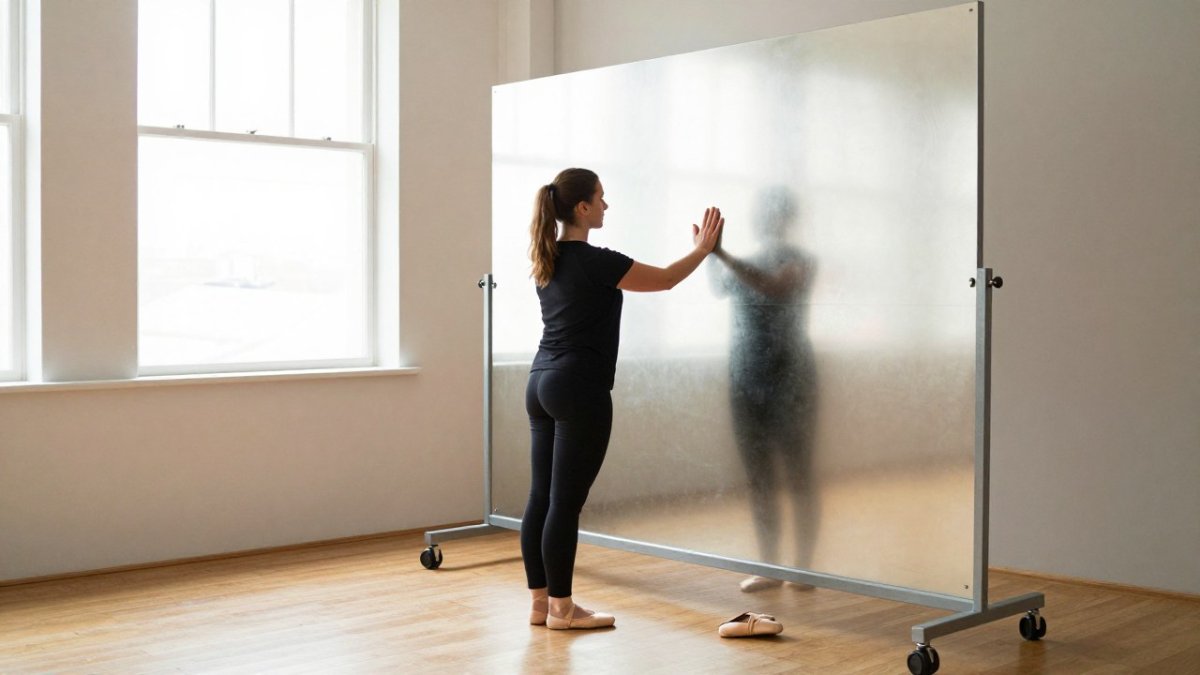
Good placement starts with where students will stand and move. Map the training area first, then position mirrors so students can check their form without facing away from the instructor. A freestanding mirror dividing wall can also structure the training space while adding mirror surface.
Keep panels clear of exits, fire routes and areas where students run or spar. Leave a safe margin between the mirror surface and the nearest training line.
Check lighting too. Glare on the glass hides the reflection, so position mirrors away from direct window light where possible.
Choosing Your Mirror Setup for Your Training Room
Start with four questions: how the room is used, whether you can drill into walls, what safety specification you need, and how much space you have for storage.
Work through them in this order:
Confirm whether permanent installation is allowed
Decide on the material based on impact risk and clarity needs
Set the coverage you need, whether full-length or partial
Plan the layout around instructor sightlines and exit routes
Get a quote that includes the glass specification and fixing method
Pricing depends on panel size, quantity, material and delivery, so request a quote for your specific room. You can review current products on our website before you contact us.
Frequently Asked Questions
What type of mirror is best for a martial arts training room?
Mirror choice depends on how the room is used. Confirm the specification with your supplier before ordering, and ask for the safety backing, edge finish and fixing method in writing.
Are mirrors useful for martial arts training?
Mirrors help students check stance, posture, alignment and the path of a strike, and they let instructors see a class at a glance. Visual feedback speeds up self-correction for beginners, who often cannot yet feel when a movement is off. The main limitation is over-reliance: students who watch themselves constantly can neglect body awareness. Many instructors therefore use mirrors for setup and drills, then ask students to practise with their eyes closed or facing away.
Are portable mirrors suitable for a dojo?
Portable mirrors on wheels suit multi-use halls and rented premises where drilling is not an option. Lockable wheels keep a panel steady during training, and stackable designs make storage easier when the room is not in use.
How should mirrors be positioned in a martial arts studio?
Place mirrors on the wall the class faces during standing drills, so students can see their whole body without turning. Keep them clear of doorways, fire exits and areas where people walk past at speed. Leave a safe margin between the mirror edge and any moving equipment. Full-length coverage is useful for form work, while shorter panels can be enough for a smaller room or a single instructor position.

Comments